Caster Wheel Material Selection: Floor Protection & Noise Guide
Caster Wheel Material Selection: The Ultimate Guide to Protecting Floors and Reducing Noise
For most individuals, the first thing that comes to mind when picking casters is only the size and weight of the casters. However, the wheel material is, in fact, the most crucial one. Choosing the wrong material leads to thousands of dollars in floor damages. This is very true for floors that are coated, for instance, an epoxy floor. Moreover, it might also make your workplace noisy. Affected employees who have to push heavy carts may even sustain injuries. The right choice of caster wheel material is thus a little detail to think about but one that brings a lot of changes. Choosing the right caster wheel materials is not just about weight limits, but also performance and protection. In this guide, we will show you the key factors. You can prevent floor marks by learning how to do this. You will even be able to balance wear resistance and rolling ease together. This comparison between rubber vs PU, nylon, and phenolic will help you choose the right option.
.png)
Key Takeaways
Protect Your Floors: The wrong wheel material can cause permanent floor marks and damage. This is especially true on an epoxy floor. Non-marking polyurethane (PU) and thermoplastic rubber (TPR) are the safest choices for delicate surfaces.
Balance is Key: There is no ultimate "best" material. You need to find a balance between the four: floor protection, rolling resistance (the ease of pushing), noise level, and wear resistance (the durability of the cart).
Hard vs. Soft Trade-offs: Hard wheels (nylon, phenolic) are easy to roll but are noisy and damage floors. Soft wheels (rubber, TPR) are quiet and protect the floor, but it takes more effort to push them.
Rubber vs. PU: For most uses, rubber and polyurethane are top choices. Choose non-marking rubber for the quietest operation and best shock absorption. Polyurethane is an option for higher weight limits, better wear resistance, and easier rolling.
Avoid Common Mistakes: Never use standard black rubber wheels on light-colored or epoxy floors. They will leave marks. Hard nylon and phenolic wheels should also be avoided on any finished or delicate flooring.
Introduction: Why the Right Wheel Material is Your Most Important Choice
Generally, the selection of a caster wheel can turn into a very costly move if the wrong one is selected. We've seen facilities spend thousands on a new epoxy floor just to have it ruined by ugly black marks from standard rubber wheels. On certain occasions, heavily loaded hard nylon wheels crushed the layer of the floor. Thus, their repairing costs go up. Aside from floor damage, having the wrong material can also be one of the culprits for excessive noise. Carts may also become difficult to push.
This is why caster wheel material selection is so important. It directly affects how well your workplace runs. It affects safety and total costs. The key is to understand the trade-offs. We will explore the four most important factors to consider. Then, we will perform a comparison of the mainstream materials: Polyurethane (PU), Rubber, Nylon, and Phenolic. This will give you the knowledge to choose the perfect wheel for your needs.
The 4 Key Performance Factors in Caster Wheel Selection
To be smart in making your choice, you will have to evaluate materials based on four key variables. Each of them can influence your daily work, budget, and workplace environment. The first step in proper caster wheel material selection is to know about them.
Floor Protection: Preventing Scuffs and Floor Marks
Protecting your floors is often the top concern. Certain wheels are "marking," which refers to their nature of leaving black streaks and scuffs. "Non-marking" wheels are produced from specific materials that do not transfer colors to the surface of the floor. This is a must-know, especially for organizations that operate on an epoxy floor, vinyl tile (VCT), or polished concrete.
However, damage isn't just about marks. Hard, sharp debris can get stuck in a soft wheel, turning it into a tool that scratches the floor as it rolls. On the other hand, very hard wheels like nylon can crush or dent softer floor surfaces under a heavy load.
We have seen cases of organizations that bought a whole new epoxy floor only to later get it ruined by black marks from standard rubber wheels or crushed by heavy nylon wheels. A non-marking polyurethane or thermoplastic rubber (TPR) wheel would have prevented this.
Rolling Resistance: The Effort to Get Moving and Keep Going
Rolling resistance is the amount of force needed to push or pull a cart. A lower rolling resistance means your team can move loads more easily. This results in less strain and injuries and increases work efficiency.
The link is simple: harder wheels have lower rolling resistance on smooth, hard floors. Softer wheels have higher rolling resistance because they bend more, creating a larger contact area on the floor. The floor surface also matters. A hard wheel on a rough floor would be hard to move. A softer wheel can navigate over small obstacles more easily.
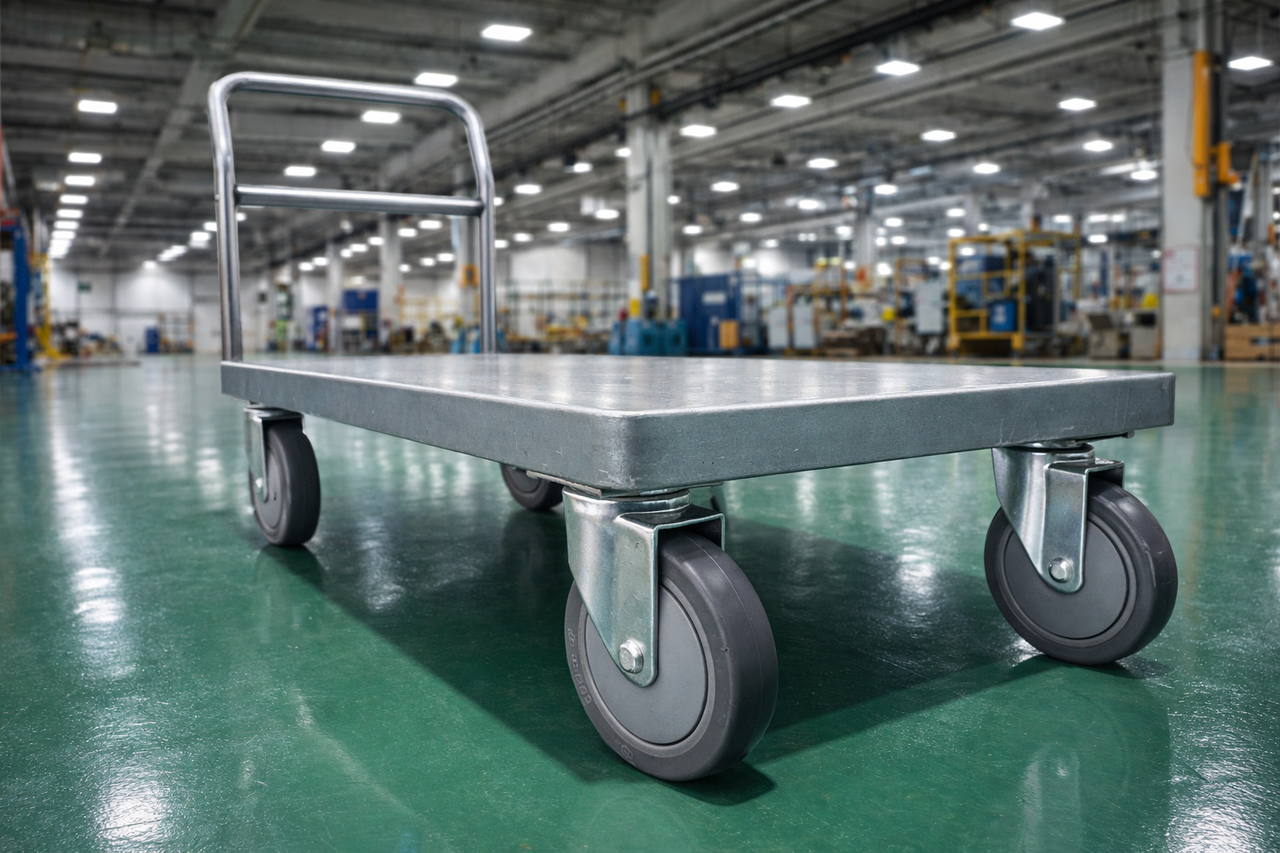
Noise Level: Creating a Quieter, Safer Workplace
The noise level of a caster is directly related to its material. Hard materials such as phenolic or nylon tend to make a loud, clattering sound as they roll, especially over cracks or uneven surfaces. This noise can be distracting and unpleasant.
In contrast, soft materials like rubber and soft polyurethane absorb vibrations and roll quietly. For places like hospitals, labs, offices, or quiet production areas, it is of utmost priority to choose a wheel with a low noise level. This creates a productive and safe atmosphere.
Wear Resistance & Durability: Getting the Most Life and Value
Wear resistance describes how well a wheel stands up to scraping, tearing, and chunking. A wheel with strong resistance to wear will last longer. This will, in turn, lower your replacement costs and maintenance time. The total price is often lower if the wheel is durable, even if it starts at a high price.
There are multiple factors that can affect a wheel's lifespan. These include the load weight, the condition of a floor (like debris or cracks), and exposure to chemicals or moisture. A vital technical specification to refer to is the durometer. A wheel's durometer, or hardness, is a crucial factor that determines its wear resistance and floor protection capabilities.
A Practical Comparison of Common Caster Materials
Now let us talk about the most common materials. We are going to compare them according to the four important factors to help you with your caster wheel material selection. This caster material comparison shows the clear trade-offs between different options.
Polyurethane (PU): The Versatile Workhorse
Polyurethane is one of the most widespread and adaptable materials. It offers a great balance of performance features.
Best for: A mix of floor protection, high weight capacity, and excellent wear resistance.
Floor Protection: Most polyurethane wheels are non-marking and are an excellent choice for an epoxy floor and other finished surfaces.
Rolling Resistance: Polyurethane has low rolling resistance on smooth floors, making carts easy to push.
Noise Level: It is much quieter than hard materials like nylon or phenolic, but slightly louder than soft rubber.
Wear Resistance: It has great resistance against scraping, oils, and many chemicals.
Rubber (and Thermoplastic Rubber - TPR): The Quiet Protector
Rubber wheels are widely recognized for their quiet operation and their ability to absorb shock. This makes them ideal for protecting delicate cargo.
Best for: Maximum noise reduction, floor protection, and shock absorption.
Floor Protection: Excellent. However, you need to be careful. Standard black rubber can leave terrible floor marks. Always specify non-marking gray rubber or TPR to be safe.
Rolling Resistance: Rubber has higher rolling resistance than PU, meaning it takes more effort to move.
Noise Level: This is the quietest wheel material available.
Wear Resistance: Good, but it may wear out faster or chunk on rough surfaces, especially under heavy loads, compared to polyurethane.
.png)
Hard Nylon: The High-Capacity, Low-Effort Roller
Nylon is an extremely rigid and tough plastic. It works best in certain applications but can be a poor choice in others.
Best for: Moving very heavy loads on perfectly smooth concrete floors where ease of rolling is the top priority.
Floor Protection: High risk. Nylon is very hard and can easily crack, dent, or scratch floor coatings. We do not recommend it for an epoxy floor or any delicate surface.
Rolling Resistance: Extremely low, making heavy loads feel lighter.
Noise Level: Very loud and clattery.
Wear Resistance: Excellent against scraping on smooth surfaces and resistant to most chemicals. However, it can become brittle and chip.
Phenolic: The Budget-Friendly, High-Capacity Choice
Phenolic wheels are made from a compound of phenolic resin and shredded canvas. They are a low-cost option for heavy loads.
Best for: Heavy static loads or uses where cost is the main concern and floor condition is not.
Floor Protection: High risk. Phenolic wheels are hard and brittle. They can chip if they roll over debris, and those chips can then scratch and gouge floors. Not for delicate surfaces.
Rolling Resistance: Very low on smooth floors.
Noise Level: Very loud.
Wear Resistance: Good, but they are prone to cracking or chipping from impacts.
Caster Material Comparison Chart
| Feature | Polyurethane (PU) | Non-Marking Rubber/TPR | Nylon | Phenolic |
|---|---|---|---|---|
| Epoxy Floor Friendly? | Yes | Yes | No (High Risk) | No (High Risk) |
| Non-Marking Property | Excellent | Excellent (if specified) | Excellent | Good |
| Rolling Resistance | Low | High | Very Low | Very Low |
| Noise Level | Quiet | Very Quiet | Very Loud | Very Loud |
| Wear Resistance | Excellent | Good | Excellent | Good (but brittle) |
| Typical Load Capacity | Medium to High | Low to Medium | High to Very High | High |
Polyurethane vs. Rubber Casters: A Head-to-Head Showdown
The choice between polyurethane vs rubber casters is one of the most common dilemmas. Both protect the floor great, but their advantages lie in different areas. The following is a brief guide to help you decide.
Choose Rubber When...
Noise reduction is your number one priority (e.g., in hospitals, labs, or libraries).
You are moving fragile items that need maximum shock absorption.
Your loads are in the light to medium range.
You need extra grip or traction on the floor.
Crucial Note: Always specify non-marking rubber or TPR to avoid black floor marks.
Choose Polyurethane (PU) When...
.png)
You have heavier loads but still need to protect your floors.
Durability and long-term wear resistance are more important than absolute quietness.
You need better resistance to oils, grease, or certain chemicals.
Lower rolling resistance (easier pushing) is a key goal for worker comfort.
Frequently Asked Questions (FAQ)
What is the best caster wheel for an epoxy floor?
A non-marking polyurethane (PU) wheel or a non-marking thermoplastic rubber (TPR) wheel is the best choice for an epoxy floor. PU offers better durability and higher capacity for heavy loads, while TPR is quieter and provides more cushion. Avoid hard materials like nylon and phenolic, as they can easily scratch, crack, or crush the epoxy coating.
Do all rubber wheels leave black marks?
No, but many standard, low-cost black rubber wheels do. These floor marks can be very hard to remove. To be safe, always choose wheels that are specifically sold as "non-marking." These are typically a gray color and made from thermoplastic rubber (TPR) or a special rubber compound that does not leave streaks.
Is a harder wheel always better?
Not necessarily. A harder wheel, like nylon or phenolic, has lower rolling resistance, which makes it easier to push on a smooth surface. However, it is also much noisier, provides no shock absorption for the cargo, and is very likely to damage floors. The "best" hardness is a trade-off that depends on your priorities for rolling effort, noise level, and floor protection.
How does load capacity relate to caster wheel material selection?
The material is a primary factor in a wheel's load capacity. As a general rule, harder materials can support heavier loads. Nylon, phenolic, and polyurethane wheels bonded to a metal core can handle much higher capacities than soft rubber wheels. Always select a caster with a dynamic load rating that is higher than your maximum calculated load per wheel.
Can I use the same caster wheels indoors and outdoors?
You can, but it requires careful selection. Polyurethane is a good all-around choice, as it holds up well to moisture and temperature changes. For very rough outdoor terrain like gravel or broken pavement, pneumatic (air-filled) or semi-pneumatic rubber wheels are best, but they have high rolling resistance indoors. Phenolic wheels should be avoided outdoors, as they can absorb moisture, swell, and break down over time.
Conclusion: Making the Right Selection for Your Application
Ultimately, there is no single "best" caster wheel material. The ideal choice comes from understanding the trade-offs between floor protection, wear resistance, rolling resistance, and noise level. The debate of rubber vs PU or the choice between nylon and phenolic depends entirely on your specific environment and goals. A thoughtful caster wheel material selection is a small decision that protects large investments, improves workplace safety, and boosts efficiency.
{ "@context": "https://schema.org", "@graph": [ { "@type": "FAQPage", "mainEntity": [ { "@type": "Question", "name": "What is the best caster wheel for an epoxy floor?", "acceptedAnswer": { "@type": "Answer", "text": "A non-marking polyurethane (PU) wheel or a non-marking thermoplastic rubber (TPR) wheel is the best choice for an epoxy floor. PU offers better durability and higher capacity for heavy loads, while TPR is quieter and provides more cushion. Avoid hard materials like nylon and phenolic, as they can easily scratch, crack, or crush the epoxy coating." } }, { "@type": "Question", "name": "Do all rubber wheels leave black marks?", "acceptedAnswer": { "@type": "Answer", "text": "No, but many standard, low-cost black rubber wheels do. These floor marks can be very difficult to remove. To be safe, always choose wheels that are specifically sold as "non-marking." These are typically a gray color and made from thermoplastic rubber (TPR) or a special rubber compound that does not leave streaks." } }, { "@type": "Question", "name": "Is a harder wheel always better?", "acceptedAnswer": { "@type": "Answer", "text": "Not necessarily. A harder wheel, like nylon or phenolic, has lower rolling resistance, which makes it easier to push on a smooth surface. However, it is also much noisier, provides no shock absorption for the cargo, and is very likely to damage floors. The "best" hardness is a trade-off that depends on your priorities for rolling effort, noise level, and floor protection." } }, { "@type": "Question", "name": "How does load capacity relate to caster wheel material selection?", "acceptedAnswer": { "@type": "Answer", "text": "The material is a primary factor in a wheel's load capacity. As a general rule, harder materials can support heavier loads. Nylon, phenolic, and polyurethane wheels bonded to a metal core can handle much higher capacities than soft rubber wheels. Always select a caster with a dynamic load rating that is higher than your maximum calculated load per wheel." } }, { "@type": "Question", "name": "Can I use the same caster wheels indoors and outdoors?", "acceptedAnswer": { "@type": "Answer", "text": "You can, but it requires careful selection. Polyurethane is a good all-around choice, as it holds up well to moisture and temperature changes. For very rough outdoor terrain like gravel or broken pavement, pneumatic (air-filled) or semi-pneumatic rubber wheels are best, but they have high rolling resistance indoors. Phenolic wheels should be avoided outdoors, as they can absorb moisture, swell, and degrade over time." } } ] }, { "@type": "Person", "name": "" } ] }