Why Heat-Resistant Casters Deform in Bakery Ovens
High Temperature Caster Guide Why Bakery Casters Deform — And How to Prevent ItA bread factory purchased high-temperature caster wheels from another supplier for their bakery trolleys. After just two weeks inside the oven, the wheels started to deform, flatten at the contact points, and become difficult to roll. The key problem was not temperature alone. Repeated heating, rapid cooling, steam, load, and movement created severe thermal stress on the wheels. |

The Hidden Challenge: It's Not Just About Temperature
Most buyers assume that if a caster is rated for high temperatures, it will perform well in any hot environment. This is a dangerous oversimplification. A bakery oven presents conditions that go far beyond steady-state heat exposure.
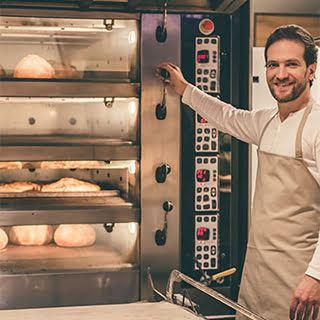
During the baking cycle, the trolley wheels face continuous temperatures of 200-268℃. But the real challenge begins when the trolley is rolled out of the oven for cooling. Within minutes, the wheels drop from 268℃ to ambient temperature — a thermal shock of over 200 degrees.
Standard high-temperature wheels may resist heat, but repeated thermal cycling, steam, and condensation can still cause deformation, cracking, and premature failure.
Three Reasons Standard High-Temp Casters Fail in BakeriesBakery trolley wheels are exposed to much more than continuous high temperature. Their real working conditions combine rapid temperature changes, moisture, mechanical load, and repeated movement. These factors create compound stress that can quickly expose the limitations of ordinary high-temperature caster materials. |

What Causes High-Temperature Casters to Fail?
01
Thermal Shock from Hot-to-Cold CyclingWhen the bakery trolley exits the oven, wheels experience a sudden 200+ degree temperature drop. This thermal shock can create micro-cracks that accumulate with every cycle until the wheel deforms or fractures. | 02
Steam and Condensation CorrosionBread baking generates significant steam and moisture. Uneven cooling caused by condensation can create stress points that weaken the wheel structure and accelerate material fatigue. | 03
Load + Heat + Movement CombinedHeavy bread trays, extreme heat, and constant movement produce compounded mechanical and thermal stress that standard high-temperature materials may not withstand. |
EDL 268℃ Casters: Engineered for Thermal Shock, Not Just Heat
When the bakery manager asked if our 268℃ casters would deform like his previous wheels, we explained the difference: EDL high-temperature casters are designed specifically for thermal cycling environments, not just continuous heat exposure.
Our wheels use specialized heat-resistant compounds that maintain structural integrity through rapid temperature changes. The material formulation resists thermal shock by absorbing and dissipating temperature gradients that would crack standard wheels.
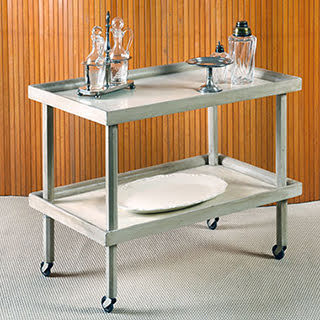
We recommended a set of 4-inch 268℃ casters for a one-month trial in the factory's most demanding oven line. The test simulated real production conditions: daily baking cycles, steam exposure, and repeated hot-to-cooling transitions.
01
268℃ Heat ResistanceDesigned for demanding industrial heating environments such as bakery ovens. | 02
Thermal CyclingBuilt to withstand repeated transitions between oven heat and ambient cooling. | 03
Steam ExposureSuitable for bakery environments where steam and condensation are unavoidable. | 04
Real-World TrialA one-month production trial verified wheel shape, rolling performance, and durability. |
Real Case: Bread Factory Trolley Wheels — From Deformation to TrustThe factory had been using competitor high-temperature casters that deformed after just two weeks. They were skeptical — until we proposed a trial: install our 268℃ casters on their worst-performing trolley and run it through daily production for one month. After 30 days of continuous use — including daily oven cycles, steam exposure, and cooling periods — the EDL casters showed zero deformation. Zero deformation after 30 days of real bakery production. The wheels rolled smoothly, maintained their shape, and showed no signs of thermal fatigue or cracking. The factory manager then placed a full production order for all bakery trolleys. |

How to Select Heat-Resistant Casters for Bakery Applications
First, confirm the caster is rated not just for maximum temperature, but for thermal cycling. Ask the supplier: "Can this wheel handle rapid temperature changes from 268℃ to ambient within minutes?"
Second, request a trial period before committing to a full order. Real bakery conditions can be difficult to replicate completely in a laboratory, so testing the wheel in your actual oven and production cycle provides more practical evidence.
Third, consider the full environment: steam, condensation, load weight, rolling frequency, oven temperature, and cooling cycle.
A caster that handles heat alone may still fail when moisture and thermal shock are added to the equation.
The Science: Why Thermal Shock Breaks Standard Wheels
When a wheel at 268℃ encounters cool air or condensation, the surface contracts rapidly while the inner core remains hot. This temperature gradient creates internal stress within the wheel material.
In standard high-temperature wheels, repeated internal stress can develop into micro-cracks beneath the surface. After dozens of thermal cycles, these cracks can propagate until the wheel deforms, cracks visibly, or loses rolling performance.
EDL's 268℃ casters are designed to maintain structural integrity under repeated high-temperature operation and cooling cycles, making them better suited to demanding bakery environments.
Choose Heat-Resistant Casters for the Real Working Environment
Heat-resistant casters that deform in bakery ovens may simply be designed for continuous heat rather than repeated thermal cycling.
The combination of 268℃ temperatures, steam, condensation, load, movement, and rapid cooling creates a much more demanding working condition than temperature rating alone can describe.
When selecting casters for bakery applications, focus on the complete working environment and verify performance through real-world testing whenever possible.
EDL's 268℃ casters passed a one-month bakery trial with zero deformation, giving the customer the confidence to proceed with a full production order.
Need Heat-Resistant Casters That Survive Bakery Ovens? Tell EDL your oven temperature, trolley load weight, daily cycle frequency, and any wheel deformation issues you've experienced. Our team can recommend a suitable 268℃ high-temperature caster solution for your bakery application. | Get A Quote |
- Prev:Why Cheap Caster Wheels Are Not Cost-Effective
- Next:no more