Replace the Wheel or the Whole Caster?
Caster Replacement Guide
Replace Only the Wheel or the Entire Caster?
In many industrial applications, customers do not always need to replace the whole caster. If the bracket is still in good condition, replacing only the wheel can often reduce maintenance cost and restore daily rolling performance.
Lower Cost
Wheel replacement can reduce unnecessary spending.
Correct Fit
Wheel size and axle dimensions must match.
Better Selection
Replacement can be matched to the real working condition.
Real Purchasing Situation
A Common Question from Industrial Customers
A customer may come to us and say: “The wheels on our equipment carts are badly worn, but the metal brackets still look strong. Do we need to replace the complete caster, or can we just buy new wheels?”
This is a very common situation in factories, warehouses, workshops, and equipment maintenance departments. In many cases, the wheel wears out faster than the bracket. If the bracket is not bent, the swivel structure still works, and the brake is still reliable, replacing only the wheel may be a practical and cost-saving solution.
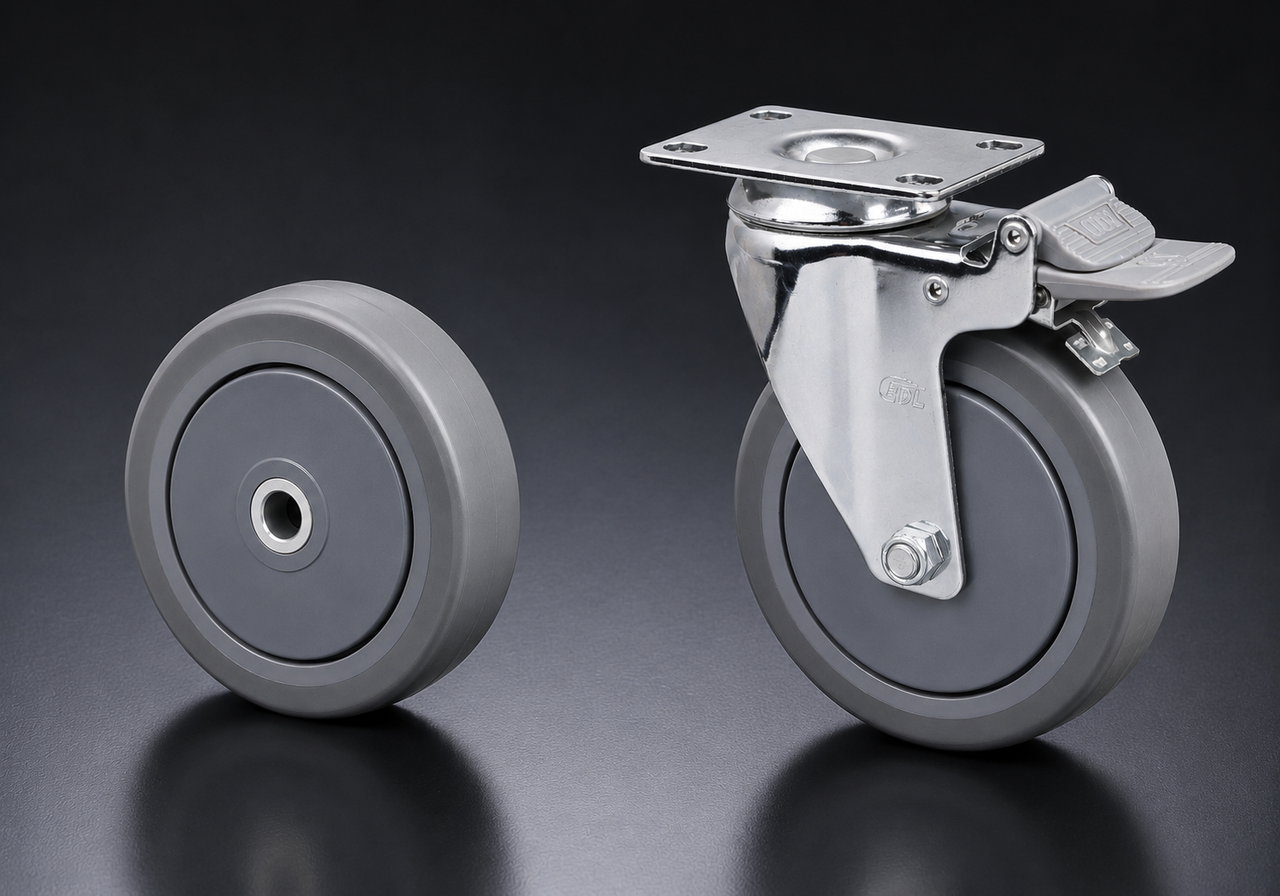
However, wheel replacement is not simply choosing a wheel that “looks similar.” The wheel diameter, wheel width, hub width, and bore size must match the existing bracket and axle. Otherwise, the new wheel may not fit, may shake after installation, or may not rotate smoothly.
When Is It Better to Replace Only the Wheel?
If the main problem is wheel wear, wheel deformation, bearing damage, or tread damage, but the bracket is still structurally sound, replacing only the wheel can often restore much of the caster’s performance.
This approach is especially useful for equipment that uses many casters of the same type. Instead of replacing the complete caster assembly every time the wheel wears out, the customer can keep the original bracket and replace only the worn wheels.
Replace Wheels
Usually suitable when the bracket is still strong and correctly aligned.
Wheel tread is worn or cracked
Wheel bearing is damaged
Wheel material is no longer suitable
Bracket is not bent or corroded
Swivel and brake still work normally
Replace Whole Casters
Recommended when the bracket or mount is unreliable.
Bracket is bent or deformed
Swivel structure is loose or stuck
Brake no longer locks safely
Mounting plate is damaged
Severe rust or long-term overload is visible
01
Key Parameters for Wheel Replacement
When a customer wants to replace only the wheel, the most important step is confirming the wheel dimensions. A small difference in size can make the wheel impossible to install or cause poor movement after installation.
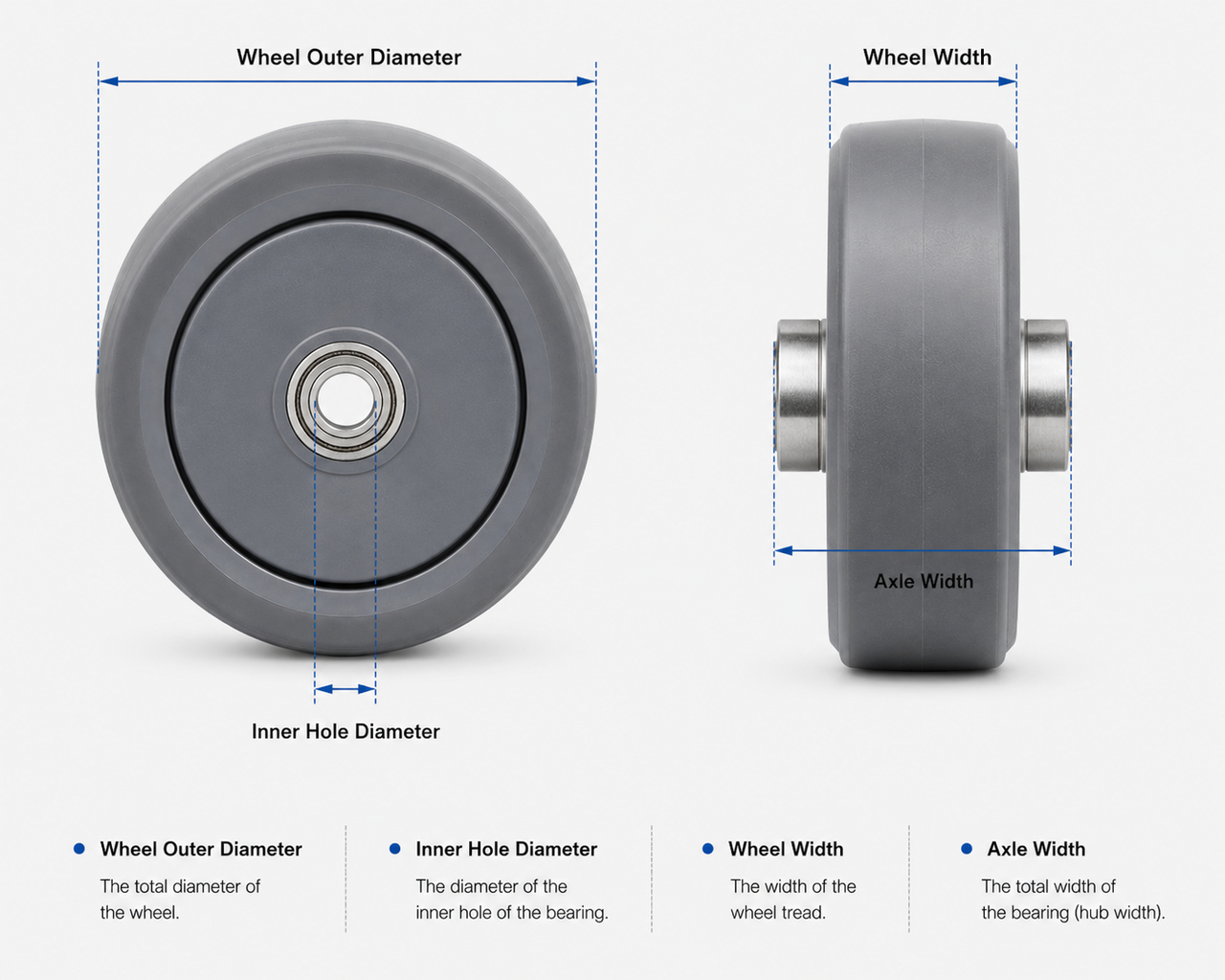
The key parameters include wheel diameter, wheel width, hub width, and bore size. These dimensions determine whether the wheel can fit into the existing bracket, whether the axle can pass through correctly, and whether the wheel can rotate without shaking.
01
Wheel Diameter
The outside diameter of the wheel. It affects caster height, rolling resistance, and obstacle crossing ability.
02
Wheel Width
The tread width of the wheel. It affects load support, ground contact, and stability.
03
Hub Width
The total width between the two sides of the wheel hub. It must match the inner bracket space.
04
Bore Size
The center hole size of the wheel. It must match the axle or bearing structure.
02
Send Us the Old Wheel for Checking
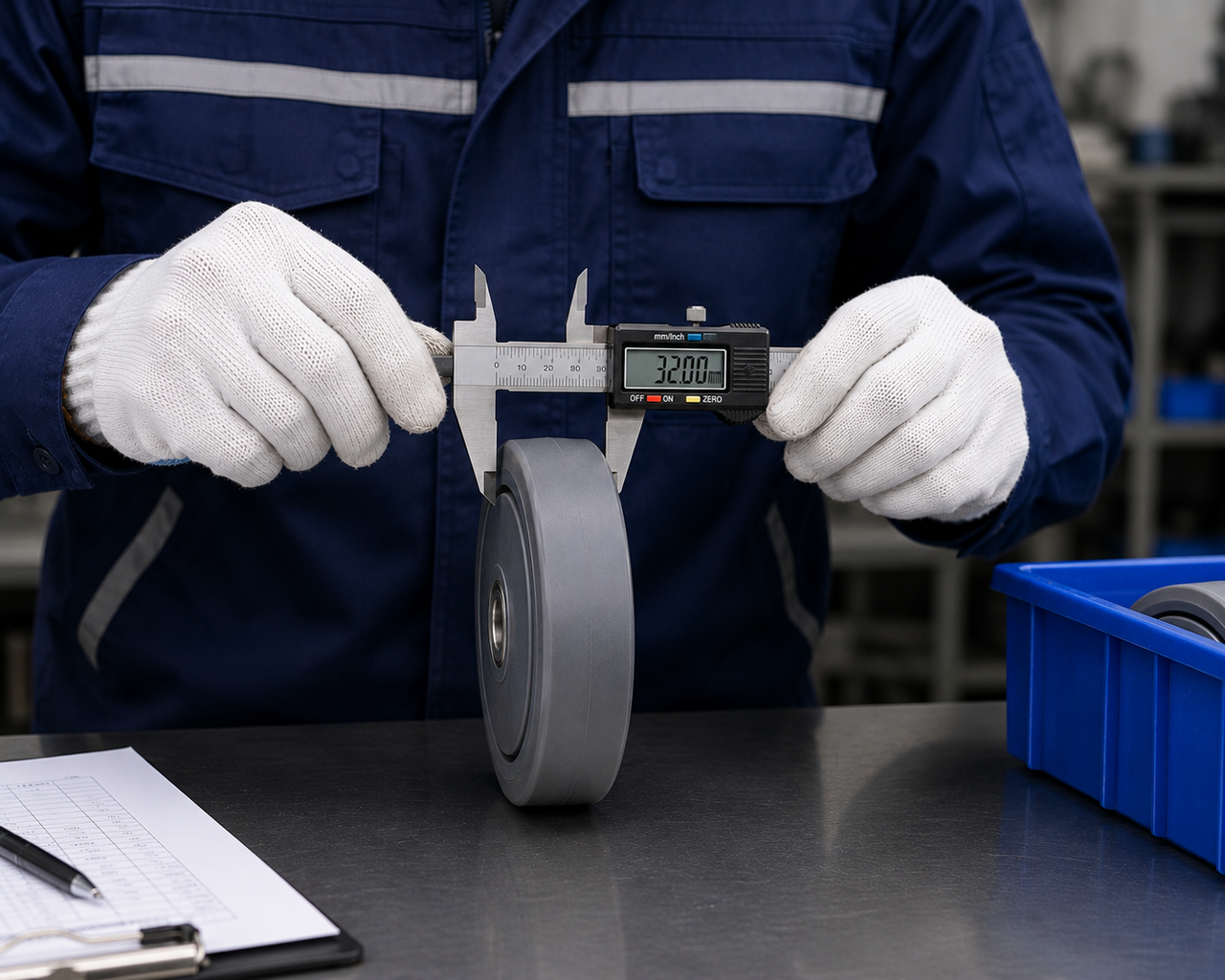
In real purchasing situations, many customers are not sure how to measure the wheel correctly. This is especially common with old equipment, non-standard casters, imported machines, or wheels that have already been worn for many years.
If the customer is worried about inaccurate measurement, the simplest method is to send the old wheel to us. We can professionally check the wheel diameter, width, hub structure, bore size, bearing type, and material condition.
After that, we can recommend a replacement wheel based not only on the old size, but also on the real working environment, such as load, floor type, noise requirement, oil exposure, and daily movement frequency.
03
Mounting Details for Full Replacement
If the bracket also needs to be replaced, the required parameters are different from wheel replacement. At this point, the mounting method becomes the key factor.
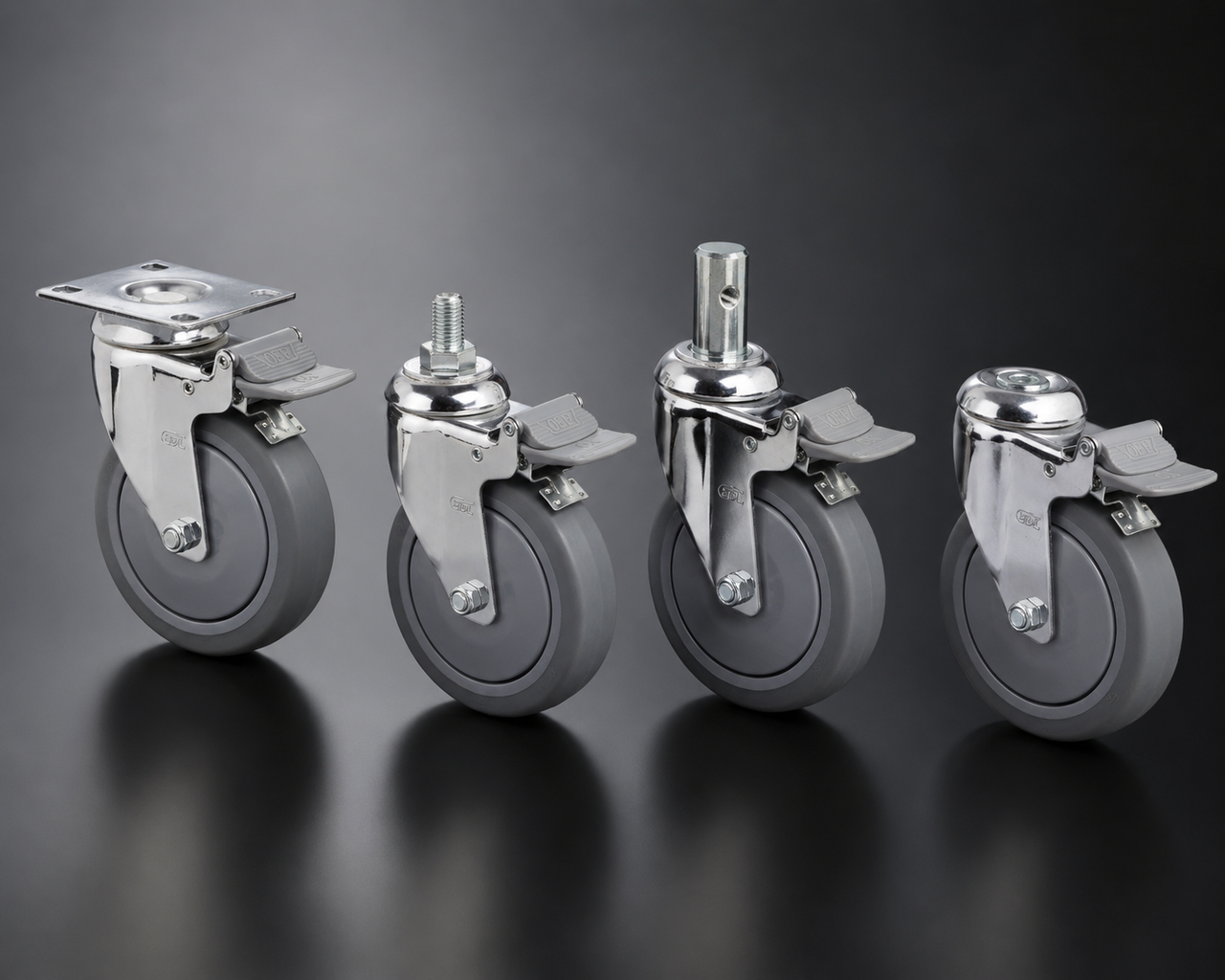
For plate casters, customers usually need to confirm the plate size, bolt hole spacing, bolt hole diameter, and overall mounting height. If the hole spacing does not match the equipment base, the caster may not be installed directly.
In some industrial equipment, mismatched mounting holes can still be solved by welding, re-drilling, or using an adapter plate. For threaded stem, grip ring stem, or hollow kingpin casters, the stem diameter, stem length, insert hole size, and installation depth must be confirmed before ordering.
The Goal Is Not Just Replacement, But Correct Matching
A replacement caster or wheel should match the old installation structure and the actual working environment.
Industrial casters may look similar from the outside, but their dimensions, load capacity, bracket structure, wheel material, and mounting method can be very different.
A correct replacement can help the customer reduce unnecessary cost, avoid installation problems, and improve long-term performance. In many cases, the best solution is not simply copying the old caster, but selecting a better wheel or structure based on how the equipment is actually used.
- Lower maintenance cost when only the wheel needs replacement
- Better safety when the full caster assembly should be replaced
- More accurate selection when old samples or clear measurements are provided
- Longer service life when the new wheel material matches the floor and load
Frequently Asked Questions
Common questions about caster wheel replacement and complete caster replacement.
Q1: Can I replace only the wheel instead of the whole caster?
Yes, if the bracket, swivel structure, brake, and mounting part are still in good condition, replacing only the wheel can be a cost-saving solution.
Q2: What dimensions are needed for wheel replacement?
The key dimensions are wheel diameter, wheel width, hub width, and bore size. These determine whether the wheel can fit the existing bracket and axle.
Q3: What if I cannot measure the wheel accurately?
You can send the old wheel to us. We can measure it professionally and recommend a suitable replacement based on size and working conditions.
Q4: What should I check when replacing the complete caster?
You need to confirm the mounting type, mounting height, plate size, hole spacing, or stem dimensions depending on the caster structure.
Need Help Matching Replacement Casters?
Send us your old wheel, caster dimensions, or application details. EDL can help you choose a suitable wheel replacement or complete caster solution.