How to Choose Caster Bracket Surface Treatment
Caster Bracket Guide
How to Choose Caster Bracket Surface Treatment
Caster brackets can be finished in many different ways. The right surface treatment affects appearance, rust resistance, corrosion protection, cost, and long-term durability.
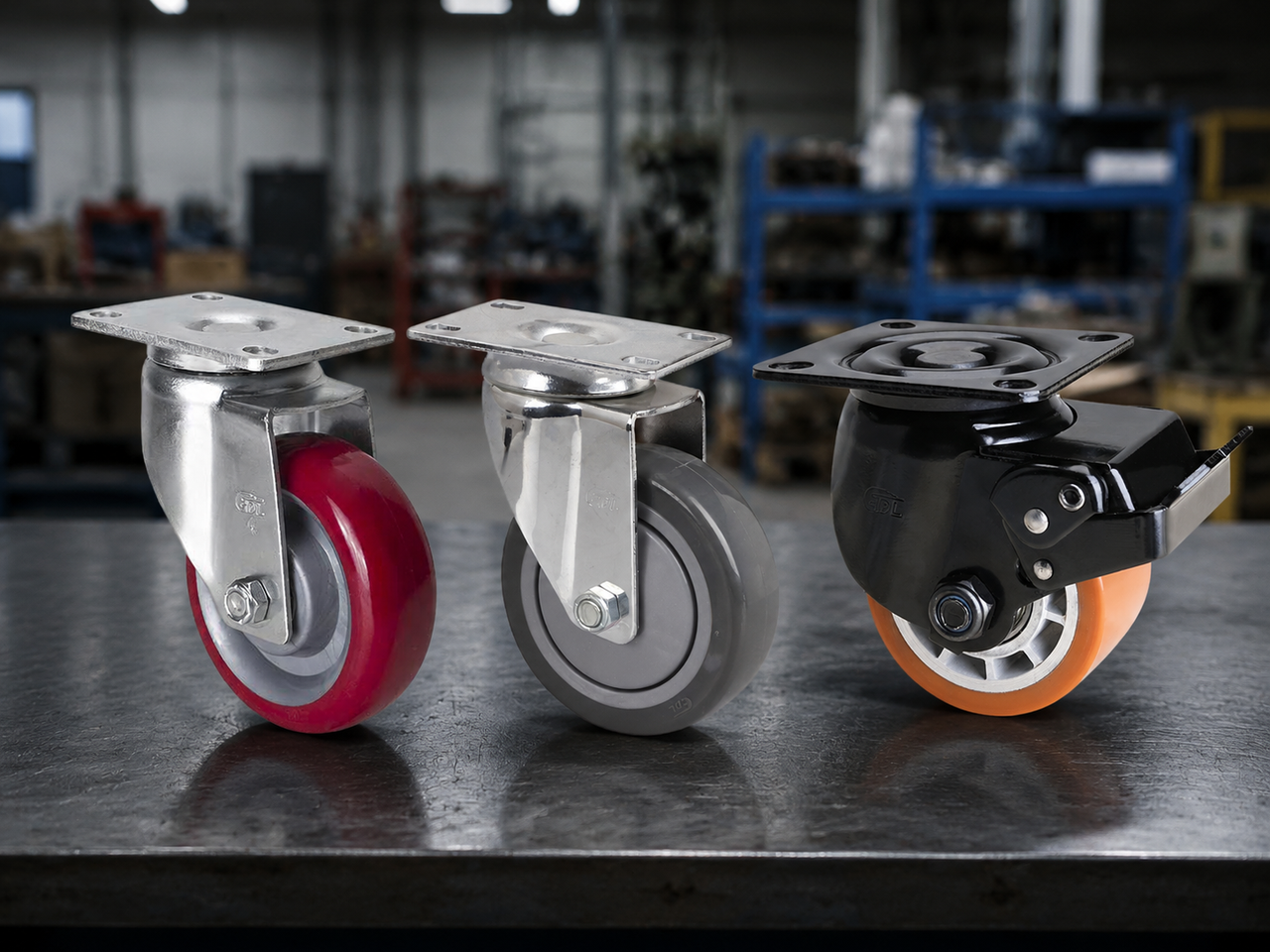
For most standard caster brackets, zinc plating is a common choice. For higher-end equipment or harsher environments, chrome plating, electrophoresis, powder coating, paint, or stainless steel finishing may be more suitable.
Why Surface Treatment Matters
A caster bracket may look like a simple metal part, but its surface treatment has a direct influence on product appearance, rust protection, corrosion resistance, and service life.
For normal indoor use, a standard zinc-plated bracket is often enough. But when the caster is used in wet areas, food equipment, medical equipment, high-end machines, or environments with higher corrosion risk, the surface treatment should be selected more carefully.
Different finishing methods have different costs, appearances, and protection levels. The best choice depends on the working environment, budget, equipment level, and corrosion resistance requirement.
Zinc Plating: Cost-Effective and Common
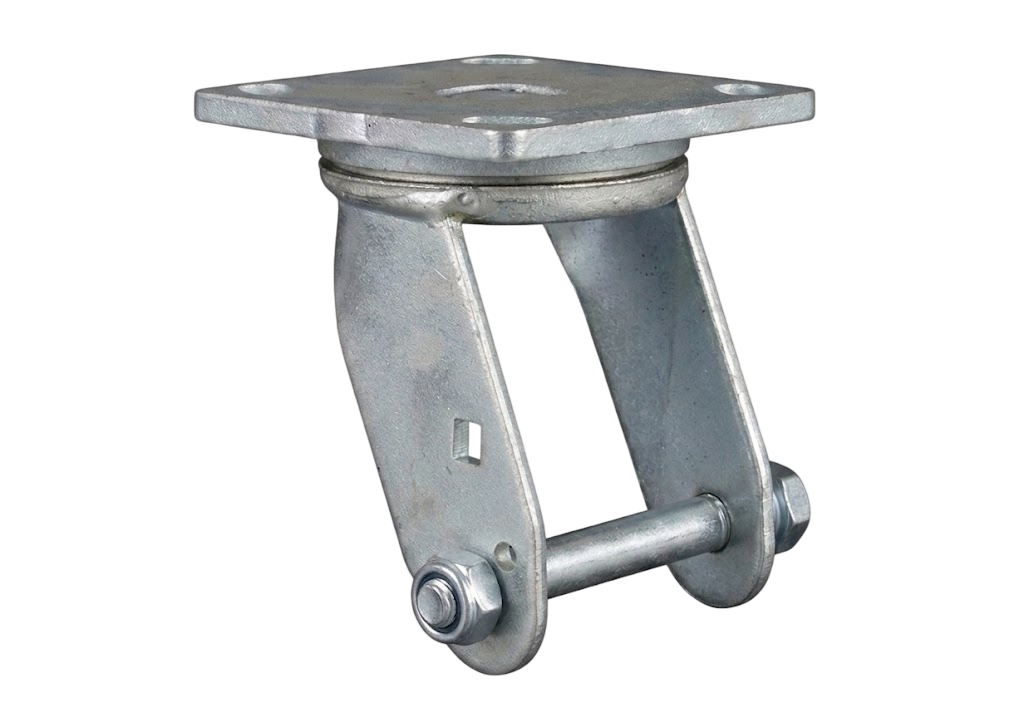
Most standard caster brackets use zinc plating because it is mature, cost-effective, and suitable for many general applications.
For indoor equipment, warehouse trolleys, tool carts, and common industrial carts, zinc-plated brackets can usually provide enough basic rust protection.
However, zinc plating also has different types, such as hot-dip galvanizing, cold galvanizing, white zinc, and yellow zinc. In general, the corrosion resistance can be understood as:
Hot-dip galvanizing > Yellow zinc > White zinc
Hot-dip galvanizing usually has a thicker zinc layer and stronger corrosion resistance, but the surface may not look as fine as electroplated zinc. White zinc looks cleaner and is often used for standard environments. Yellow zinc usually offers better corrosion resistance than white zinc and is easy to identify by color.
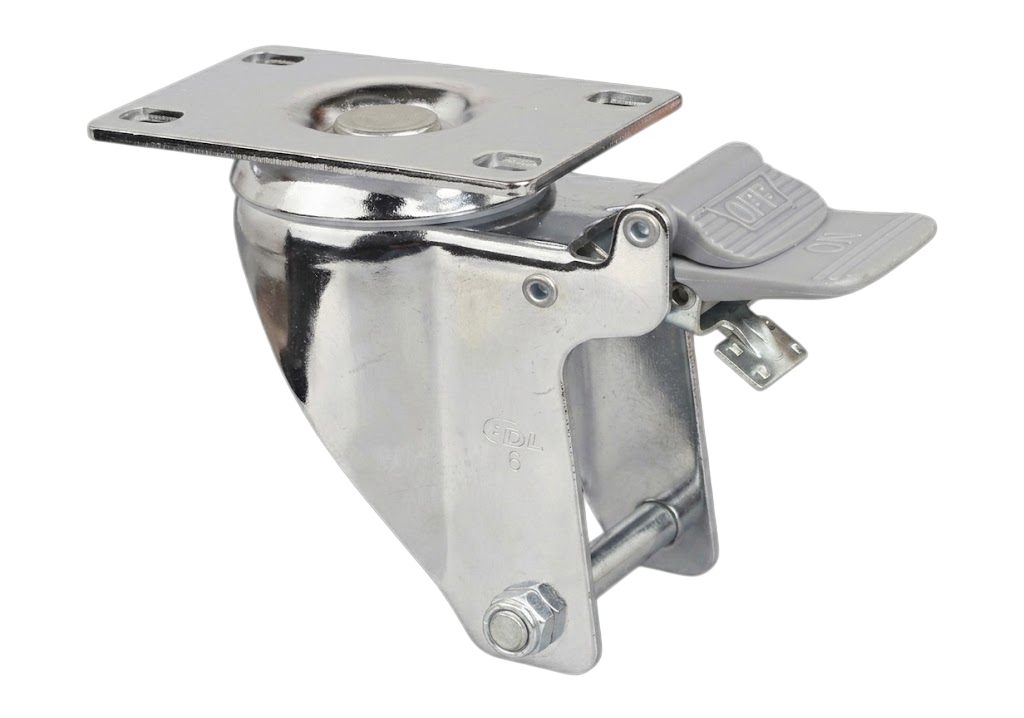
Chrome Plating: Bright and Premium
Chrome-plated caster brackets are easy to recognize because the surface is very bright, almost like a mirror.
This finish makes the caster look cleaner and more refined. Compared with standard zinc plating, chrome plating can also provide better corrosion resistance and durability in many applications.
Chrome-plated casters are often selected for equipment that requires a more premium appearance, such as display equipment, commercial equipment, high-end machines, and some food or medical applications.
The cost is usually higher than standard zinc plating. If the customer mainly cares about practical use and cost control, zinc plating may be more suitable. If the customer cares about appearance, clean design, and equipment image, chrome plating can be a better option.
.png)
Electrophoresis: More Uniform Coverage
Electrophoresis is a high-performance surface treatment often used for caster brackets that require better durability and corrosion resistance.
This process uses an electric field to make coating particles attach evenly to the metal surface, then forms a protective coating after curing.
One major advantage of electrophoresis is uniform coverage. It can cover edges, corners, gaps, and complex bracket structures more evenly than some ordinary coating methods.
Electrophoretic caster brackets are usually black, which makes them easy to distinguish from zinc-plated or chrome-plated brackets. The finish looks consistent and helps improve corrosion resistance and product service life.
Other Surface Treatment Options
✓
Powder Coating
Powder coating can provide a thicker surface layer and more flexible color options for equipment with specific appearance requirements.
✓
Paint Finish
Paint finishing can be used when the customer needs a certain color, equipment style, or customized appearance.
✓
Electropolishing
Electropolishing is often used for stainless steel parts to make the surface smoother, brighter, and easier to clean.
Why EDL M Series Uses Electrophoresis
For EDL M Series equipment casters, the brackets use electrophoresis surface treatment.
The reason is simple: M Series casters are designed for equipment applications where customers care more about stability, durability, and long-term performance.
Electrophoresis helps the coating attach more evenly to the bracket surface, including corners, gaps, and detailed structural areas. This improves corrosion resistance, helps extend service life, and gives the caster a clean, consistent appearance.
For industrial equipment, mobile platforms, machinery, and high-frequency movement applications, electrophoretic brackets can be a more reliable choice.
Conclusion
Caster bracket surface treatment should not be chosen only by appearance or price.
Zinc plating is suitable for standard applications and offers good cost performance. Chrome plating provides a brighter appearance and is suitable for higher-end equipment. Electrophoresis offers more uniform coverage and stronger corrosion resistance, making it suitable for equipment casters that require better durability.
Powder coating, paint finish, electropolishing, and other customized treatments can also be selected according to special requirements.
The right choice depends on the working environment, budget, appearance requirement, corrosion resistance requirement, and equipment level.
Need Help Choosing the Right Bracket Finish?
Tell EDL your application, working environment, corrosion resistance requirement, and appearance preference. Our team can recommend a suitable caster bracket surface treatment for your project.