Caster Wheel Troubleshooting Guide
Caster Troubleshooting
Caster Wheel Troubleshooting Guide
When a caster wheel fails, the problem is not always caused by one single factor. Some failures come from product quality or assembly details, while others are closely related to the customer’s working environment.
Understanding the real cause helps avoid repeated replacement and makes it easier to choose a caster solution that fits the actual application.
Why Caster Problems Need Diagnosis
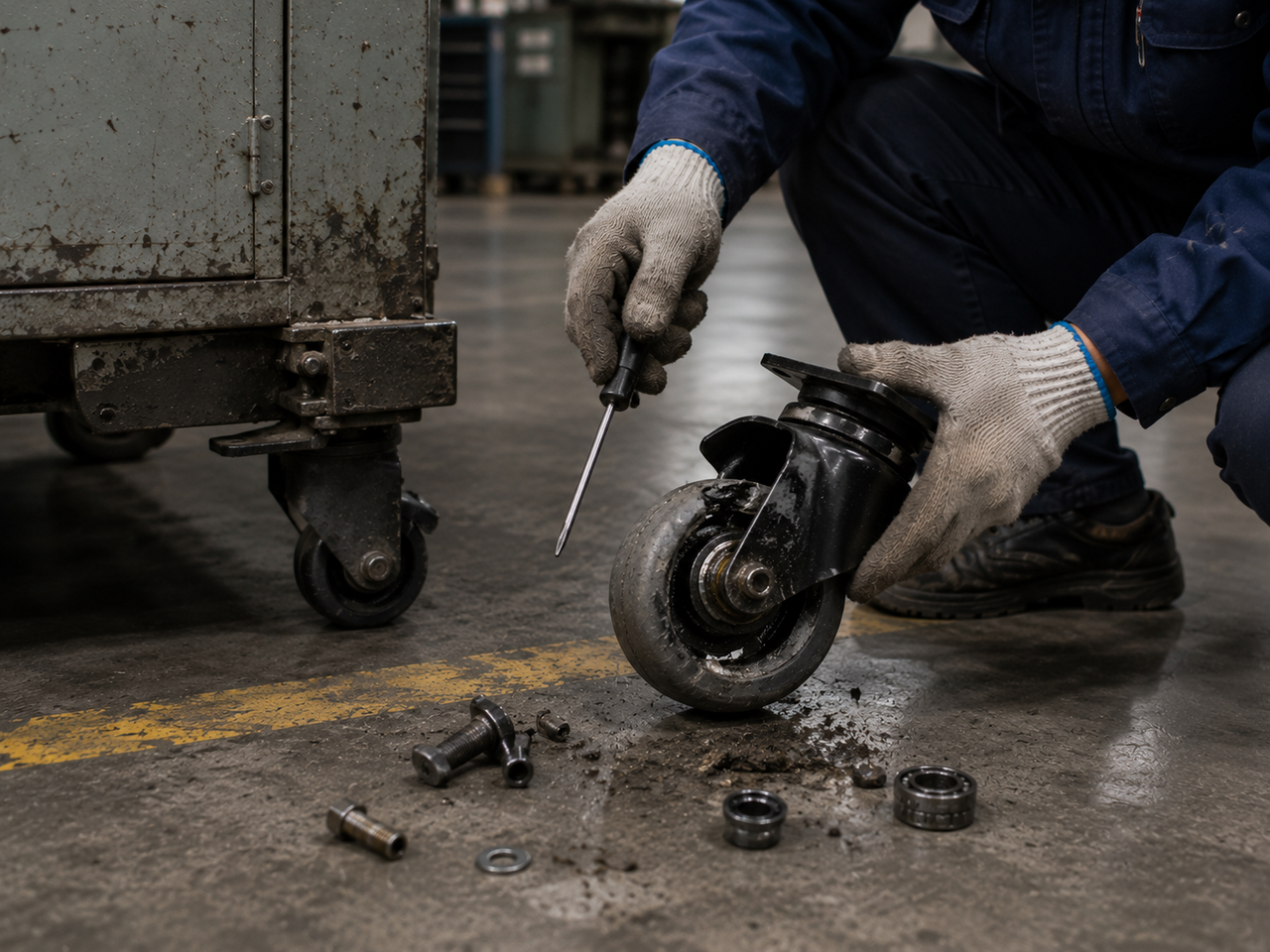
When a caster wheel breaks, many users first ask whether the caster quality is poor. This can be one possible reason.
If the caster is not manufactured carefully, problems such as unstable bearing quality, poor assembly, weak bracket structure, unsuitable material selection, or inaccurate brake design may cause early failure.
However, in many real applications, the problem is not only the caster itself. The actual working condition can be more complicated. Every factory has different floor conditions, moving frequency, load habits, cleaning methods, chemical exposure, and transportation methods.
The same caster may work well in one factory but fail faster in another environment. This is why caster troubleshooting should not stop at the surface problem. It should connect the failure type with the real application.
Common Caster Failures
1
Wheel Jamming
The wheel becomes hard to push or stops rotating because of bearing problems, dust, debris, threads, or foreign objects trapped near the wheel.
2
Wheel Deformation
The wheel may become flat, soft, cracked, swollen, or damaged because of overload, high temperature, chemicals, or unsuitable wheel material.
3
Bracket Damage
The bracket or swivel head may deform when the equipment is overloaded, dragged roughly, dropped, transported, or exposed to strong impact.
4
Rust and Corrosion
The bracket may rust or corrode in wet, outdoor, washing, salty, acidic, alkaline, or chemically aggressive environments.
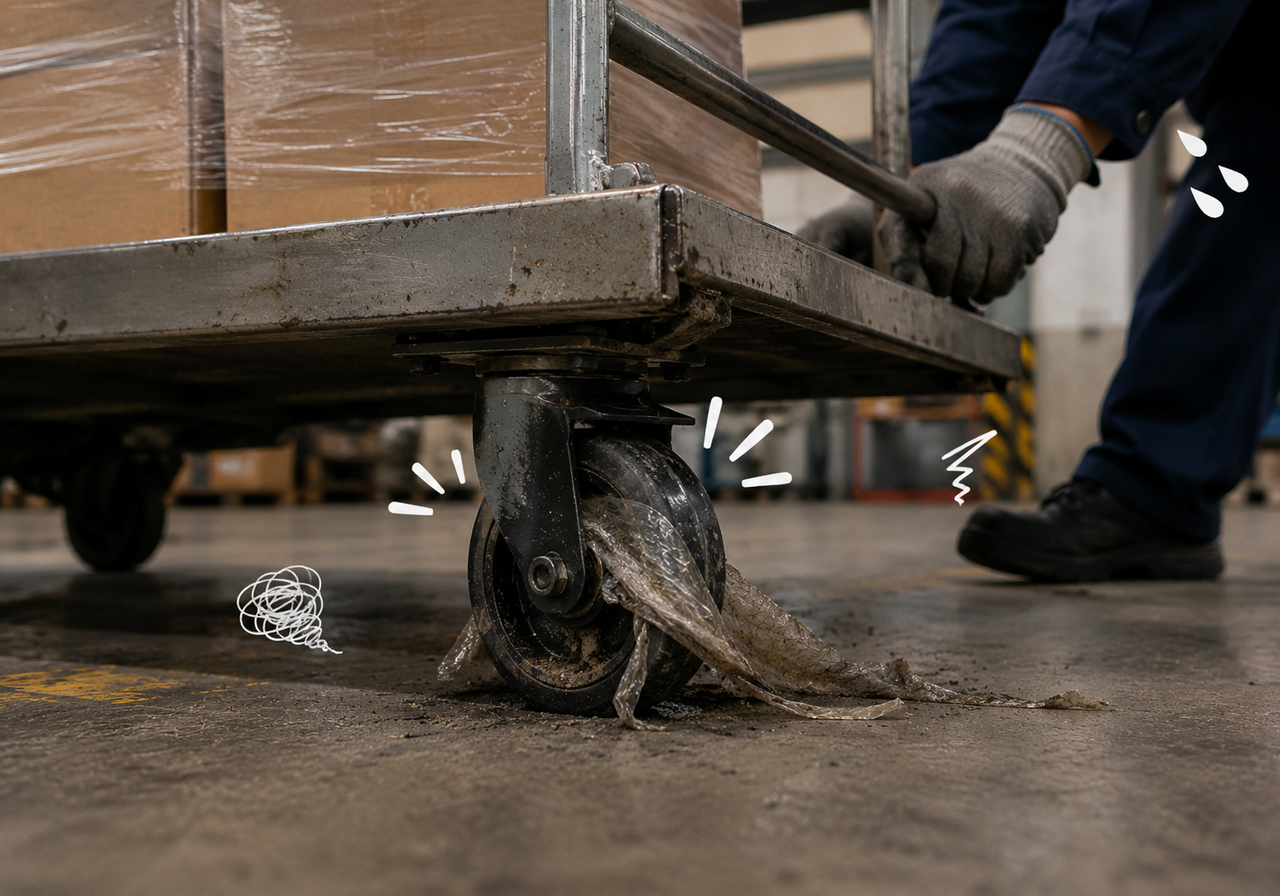
Wheel Jamming or Hard Pushing
Wheel jamming is one of the most common caster problems. Sometimes it is caused by the bearing. If the bearing quality is unstable, lubrication is insufficient, or the caster has been used for a long time in a dusty or heavy-load environment, the wheel may become noisy, stiff, or difficult to rotate.
In many factories, however, the wheel does not jam because the bearing is defective. It jams because foreign objects enter the wheel area.
For example, textile factories often have threads, fibers, and fabric scraps on the floor. As the caster rolls, these materials can wrap around the wheel sides or bearing area. At first, the cart may only feel heavier to push. If the debris is not removed, the wheel may eventually jam completely.
Similar problems can also happen in packaging workshops, warehouses, and logistics areas, where packing straps, plastic film, tape, metal chips, sand, or stones may interfere with wheel rotation.
Wheel Deformation
Wheel deformation is often related to temperature, load, and chemical exposure.
If the wheel material is not suitable for high-temperature conditions, but the caster is used near heat sources, hot floors, drying equipment, or high-temperature cleaning areas, the wheel may soften, deform, or lose its original load-bearing performance.
Long-term overload can also deform the wheel tread. This is especially common when heavy equipment stays in one position for a long time and the weight is concentrated on the wheels.
Chemical conditions should also be considered. Some factory floors may contain oil, cleaning agents, acidic or alkaline liquids, or other chemicals. If the wheel material is not compatible with these substances, the surface may soften, swell, crack, or appear to melt.
For this type of failure, checking the load capacity alone is not enough. The actual temperature, floor condition, chemical exposure, parking time, and wheel material all need to be considered.
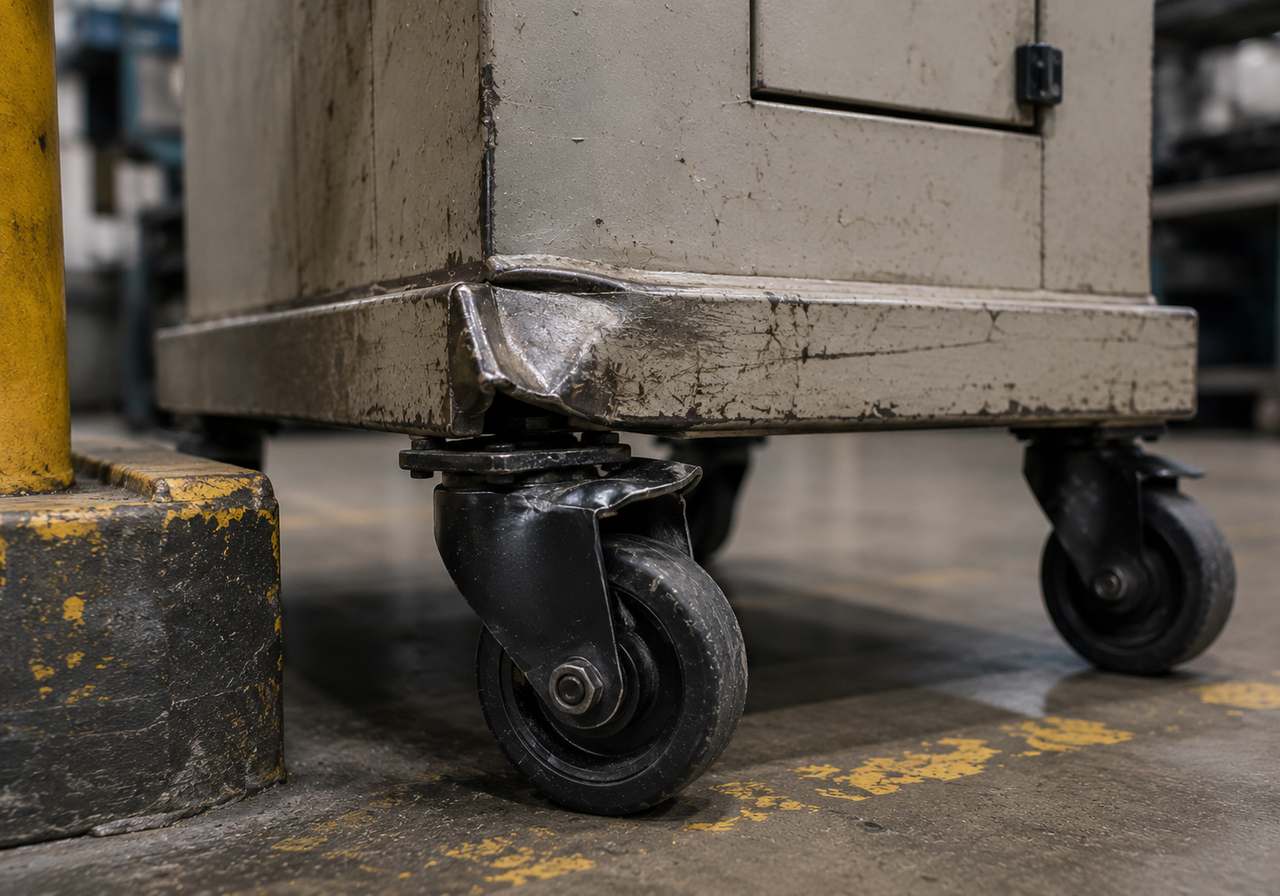
Bracket Deformation or Head Damage
If the bracket is bent, the swivel head is damaged, or the caster no longer turns smoothly, load and impact should be checked first.
The bracket is one of the main structural parts of a caster. If the equipment is used above the recommended load range for a long time, the bracket may gradually deform, and the swivel structure may become unstable.
In real applications, bracket damage is often caused not by normal static load, but by sudden impact.
For example, when equipment is moved through thresholds, floor joints, potholes, slopes, truck loading areas, forklift handling, or rough manual dragging, the caster may receive a strong side impact. This can damage the bracket head, swivel raceway, or mounting area.
Real Case: New Casters Failed After Two Months
One customer once reported that their newly installed casters failed after only two months of use. At first, the customer suspected that the caster quality was the problem.
We first checked the equipment weight and the caster load capacity. According to the information provided by the customer, the actual load did not exceed the recommended range.
If we only looked at the load data, the failure seemed difficult to explain. So we visited the customer’s site and checked the real working condition.
After inspection, we found that the equipment was not used only inside one factory. It was often moved outside to provide service for other factories. This meant that the caster was exposed to more complicated ground conditions, frequent transportation, and a higher risk of impact than expected.
We then checked the damaged caster and found clear signs of heavy impact on the bracket head. The failure was likely caused by a strong collision during transportation or handling, not by normal load use.
Instead of simply replacing the same caster, we recommended a stronger solution with higher load capacity and a more impact-resistant bracket. This helped reduce the risk of repeated damage and lowered the customer’s replacement frequency.
Rust and Corrosion
Bracket rust and corrosion are also common caster problems, especially in harsh environments.
If casters operate for a long time in wet areas, food processing plants, washing workshops, outdoor locations, or places with frequent water vapor, ordinary carbon steel brackets are more likely to rust.
If the environment also contains acidic or alkaline cleaners, disinfectants, salt spray, chemical liquids, or other corrosive substances, the surface treatment may be damaged faster, and corrosion may accelerate.
In this situation, using ordinary zinc-plated brackets may not be enough. Stainless steel casters or special surface treatment should be considered according to the actual environment.
Rust is not only an appearance problem. Serious corrosion can reduce structural strength, affect swivel performance, damage brake reliability, and shorten the service life of the caster.
Conclusion
Caster wheel failure is not always caused by a single reason. Some problems come from product quality, such as poor assembly, unstable bearing quality, unsuitable material selection, or insufficient structural strength.
But in many cases, caster failures are closely connected with the real working condition.
Threads and debris can cause wheel jamming. High temperature, overload, or chemicals can cause wheel deformation. Heavy load or strong impact can deform the bracket. Moisture and corrosive substances can cause rust and corrosion.
The key to caster troubleshooting is not simply deciding whether the caster is good or bad. The key is finding the real reason behind the failure.
Only by understanding the customer’s working environment, equipment movement, transportation method, and damage traces can we recommend a more suitable caster solution and reduce repeated failures.
Need Help Diagnosing Caster Problems?
Tell EDL your failure type, load requirement, floor condition, working environment, and damaged caster details. Our team can help analyze the cause and recommend a more suitable caster solution.