Why Choose Cast PU Wheels
Cast Polyurethane Wheels
Why Choose Cast PU Wheels
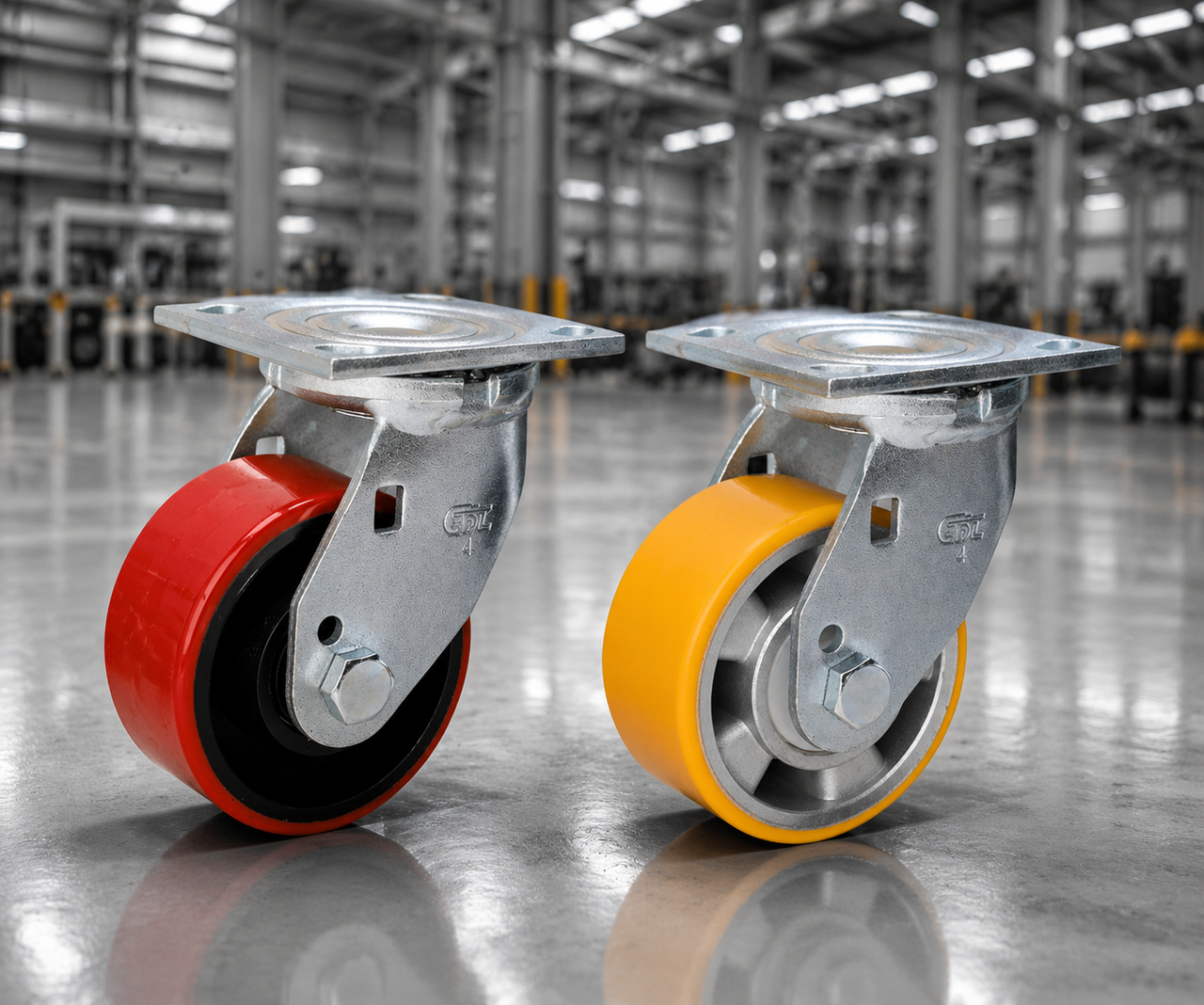
Cast polyurethane wheels are widely used in heavy-duty equipment because they combine a strong metal core, thick polyurethane tread, high load capacity, and reliable long-term performance.
Heavy Load
Strong metal core and thick tread for demanding equipment.
Wear Resistant
Durable polyurethane tread for long service life.
Customizable
Wheel size, tread thickness, and core design can be customized.
Not All Polyurethane Wheels Are Made the Same Way
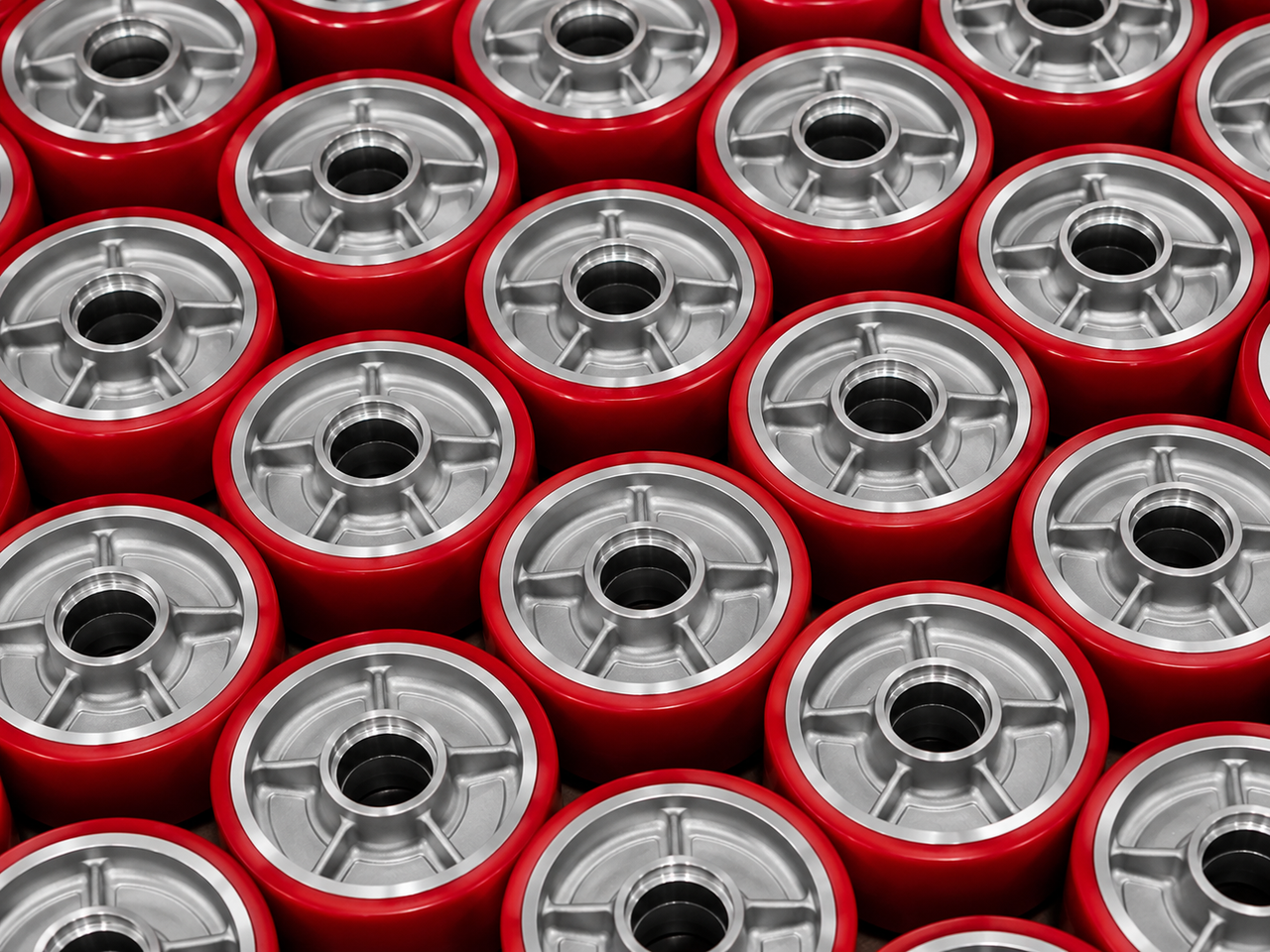
Many customers first compare wheel diameter, tread material, and load capacity. But for heavy-duty applications, the manufacturing process also matters. Cast polyurethane wheels are different from ordinary injection molded wheels because they are produced through a casting process that bonds polyurethane or rubber tread material to a pre-made metal wheel core.
This process gives the wheel a stronger structure, a thicker tread, and better performance under heavy loads. That is why cast polyurethane wheels are often selected for industrial carts, logistics equipment, automated equipment, and other demanding applications.
01
A Metal Core Comes First
The production of a cast wheel usually begins with the metal wheel core. The core is made by metal tooling and can be produced in different materials according to the application requirements.
EDL can produce steel cores, aluminum alloy cores, and stainless steel cores. Each material has its own advantages. Steel offers high strength, stainless steel is suitable for corrosion-resistant applications, and aluminum alloy provides a good balance between strength and weight.
From the perspective of international shipping cost and overall product weight, we often recommend aluminum alloy wheel cores for many overseas customers. They help reduce unnecessary weight while still maintaining reliable structural support.
.png)
02
How the Casting Process Works
After the metal core is prepared, a special adhesive is evenly applied to the surface. The core is then placed into an oven, where controlled heating activates the adhesive layer and prepares it for bonding.
The heated core is placed into the mold. At the same time, polyurethane or rubber tread material prepared in the reaction kettle is poured into the mold. The material surrounds the wheel core and forms the outer tread.
After oven curing, demolding, secondary vulcanization, and edge trimming, the cast wheel is complete. Compared with injection molding, this process allows a thicker tread, stronger bonding, and a more solid wheel structure.
Why This Process Matters for Heavy-Duty Use
The value of cast polyurethane wheels is not only in the material itself, but also in the structure created by the casting process. For customers, this means better durability, higher confidence, and lower maintenance risk in demanding applications.
Better Wear Resistance
A thick polyurethane tread helps resist wear on concrete floors, epoxy floors, and industrial working surfaces, reducing replacement frequency over time.
Higher Load Capacity
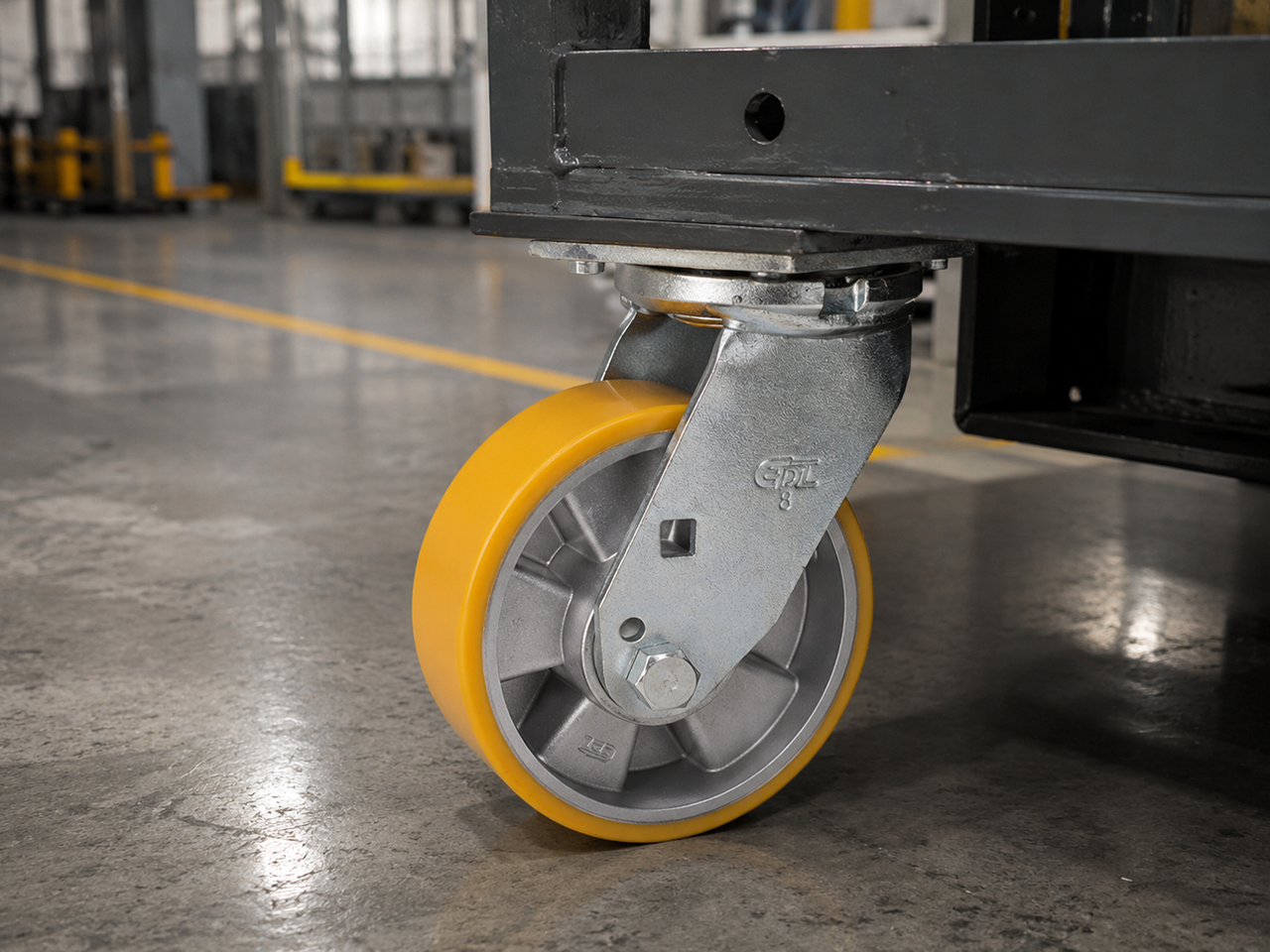
The metal core and cast tread structure help the wheel remain stable under heavy loads. EDL can produce a 6-inch polyurethane single wheel with load capacity up to 800kg.
Stronger Industrial Feel
Compared with many ordinary molded wheels, cast wheels usually have a thicker tread, heavier structure, and more solid appearance, giving customers stronger confidence.
Reusable Wheel Core
In some applications, the metal core can be reused for re-coating, helping reduce replacement cost when only the tread is worn.
Reliable Bonding
With proper adhesive treatment, heating, curing, and vulcanization, the tread and wheel core can bond more firmly and reduce the risk of debonding.
Custom Structure
Wheel diameter, tread thickness, core shape, bearing type, and hardness can be adjusted according to the customer's equipment and working conditions.
03
Why Overseas Customers Trust Cast PU Wheels
Cast polyurethane wheels are especially popular among overseas customers because they look and feel reliable. The thick tread, stable metal core, and solid structure make the wheel suitable for equipment where safety and long-term performance are important.
For many industrial buyers, the cheapest wheel is not always the best choice. A wheel failure may cause downtime, maintenance cost, or equipment damage. For this reason, customers often prefer a wheel that offers a larger safety margin and longer service life.
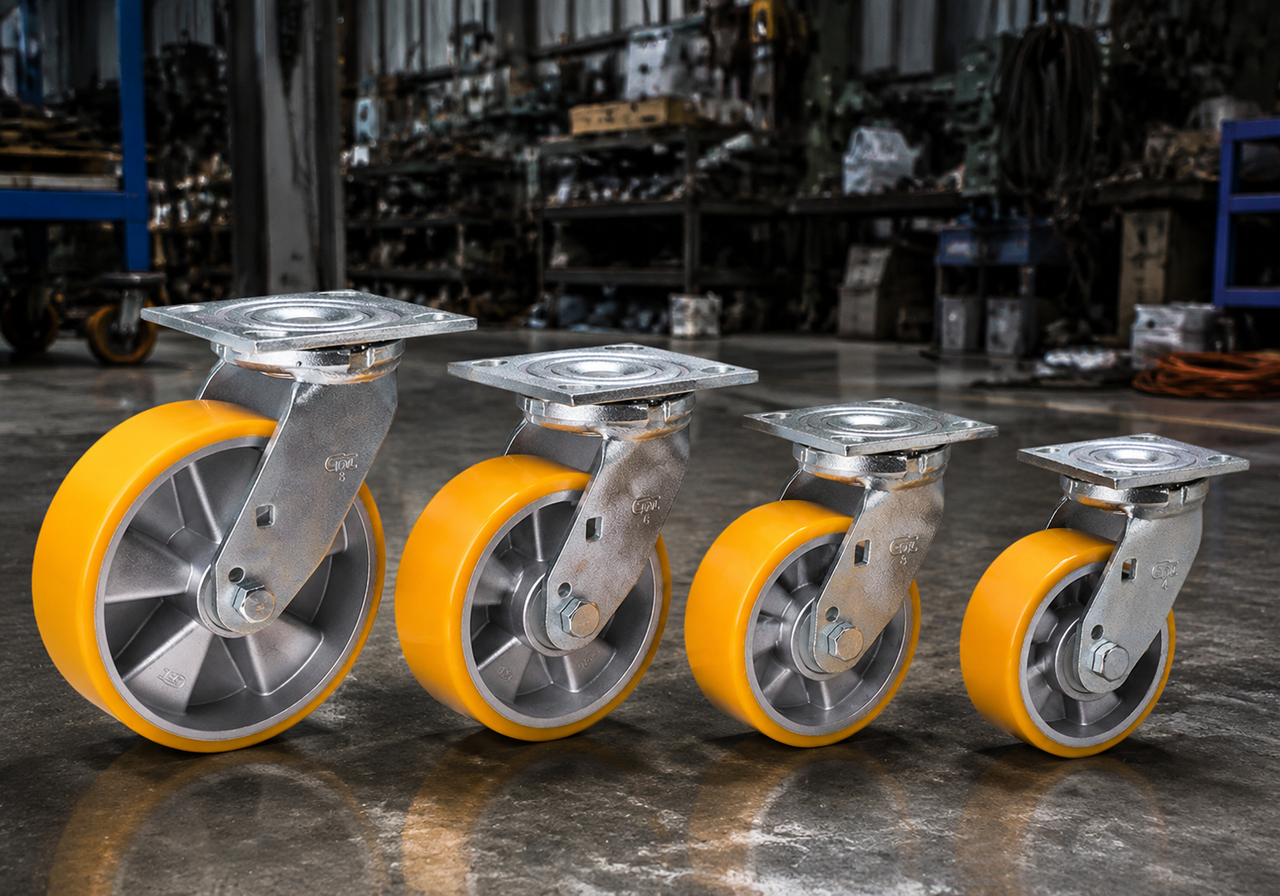
As one example, EDL can produce a 6-inch polyurethane single wheel with load capacity up to 800kg. We also provide MDI and NDI polyurethane systems to match different working conditions and performance requirements.
04
MDI and NDI Systems for Different Needs
EDL currently uses MDI and NDI polyurethane systems for production, which can meet most market requirements for polyurethane coated caster wheels. Different systems can be selected according to the required performance, working environment, and application level.
We can customize the wheel diameter, wheel width, tread thickness, core style, bearing structure, and hardness range. Whether the customer needs a standard heavy-duty wheel or a special wheel for a specific equipment structure, we can provide a suitable production solution.
This flexibility is one of the reasons why cast polyurethane wheels are widely used in heavy-duty industrial equipment, logistics carts, automation systems, and custom machinery.
Built for Long-Term Heavy-Duty Performance
Cast polyurethane wheels are not only different in appearance. Their value comes from the complete structure: the metal core, the adhesive bonding process, the cast tread material, the curing process, and the final finishing work.
For customers who need high load capacity, wear resistance, stable movement, and a more durable wheel structure, cast polyurethane wheels are often a better long-term choice than ordinary molded wheels.
At EDL, we provide cast polyurethane wheels with customizable core materials, tread thickness, wheel sizes, and polyurethane systems to match different equipment and working conditions.
Need Custom Cast Polyurethane Wheels?
Contact EDL for heavy-duty cast polyurethane wheels, aluminum core PU wheels, steel core PU wheels, and customized polyurethane coated caster solutions.